As a supplier specializing in different shapes of neodymium magnets, I get asked two questions at least once a week: “Are there crescent-shaped neodymium magnets?” and “Where would I even use something like that?” It’s easy to lump neodymium magnets into generic blocks or discs, but crescent designs fill a unique niche that standard shapes just can’t cover. Over the past 12 years in this industry, I’ve seen first-hand how a custom shape can turn a good product into a great one, and crescent neodymium magnets are one of the most underrated examples of that. Different Shapes Of Neodymium Magnets

First, let’s cut through the confusion about whether crescent-shaped neodymium magnets even exist. A lot of people assume you have to machine a raw neodymium ingot into a curve, but the reality is simpler (and more precise) than that. Neodymium magnets are made through a powder metallurgy process: you mix rare earth powders, press them into custom molds, sinter them in a high-temperature furnace, then machine and coat the final part. For crescent shapes, molds are tailored to the exact radius and thickness a project needs—no messy, wasteful machining required for standard orders. The “crescent” here isn’t just a random arc, either; we can adjust the curve from a thin, gentle half-moon to a sharp, deep arc depending on the application. They’re not as common as discs or blocks, but they’re definitely a manufactured, high-performance shape, not a custom afterthought.
The key advantage of a crescent shape comes down to magnetic field distribution. Unlike a uniform block or disc, a crescent’s curved profile lets you concentrate magnetic flux where it’s needed most, while reducing interference in surrounding areas. That’s why engineers don’t just pick a crescent because it looks different—they pick it for function. Let’s break down the most common, real-world uses I’ve seen our crescent neodymium magnets go into, because that’s where the rubber meets the road.
The biggest industry for our crescent neodymium magnets is electric motor and generator manufacturing. Most small-to-medium electric motors (think the ones in power tools, lawn equipment, electric bikes, and even some HVAC systems) rely on permanent magnets to generate rotational force, or torque. Early motor designs used simple disc or bar magnets, but those had a problem: the gap between the rotor (the spinning part) and stator (the stationary part) was uneven, so magnetic flux would leak in areas that didn’t contribute to torque. Crescent magnets fix that perfectly. If you line a ring of crescent magnets around the inside of a motor’s stator, the curved edge fits flush against the stator’s inner wall, and the pointed edge faces directly toward the rotor—creating a uniform, tight magnetic gap all the way around. This boosts torque output by 10-15% compared to flat bar magnets of the same weight, and it cuts down on energy waste from flux leakage. Last year, we supplied a batch of crescent neodymium magnets to a mid-sized electric bike manufacturer for their mid-drive motors, and they told us the new design let them shrink the motor’s size by 20% while keeping the same range—something that would’ve been impossible with standard magnets.
Another huge use case is in speakers and audio equipment. High-fidelity (hi-fi) speakers, studio monitors, and even car audio subwoofers need a magnetic field that’s evenly distributed across a speaker’s voice coil to avoid distortion. A standard disc magnet placed behind a speaker cone creates a field that’s strongest right in the center, which causes the outer edges of the cone to move unevenly, leading to “ringing” or distorted sound, especially at low frequencies. Crescent magnets solve this by creating a magnetic field that’s strongest along the full outer edge of the voice coil, matching the shape of the coil itself. This is called a “gap field shaping” design, and it’s why high-end studio monitors use crescent neodymium magnets instead of cheaper disc ones. I worked with a small audio brand last year that switched to our crescent magnets for their line of portable Bluetooth speakers; they reported a 30% drop in harmonic distortion in their low-end frequencies, which was a game-changer for competing with larger audio brands. Even in smaller devices, like headphones, we supply tiny crescent magnets for the speaker drivers—they’re small enough to fit in the tight space of an earcup, and their curved shape fits the driver’s chassis perfectly, no wasted space.
Medical devices are another area where crescent neodymium magnets are critical, especially in portable diagnostic and implantable devices. Let’s take insulin pumps, for example—many modern insulin pumps use a magnet to attach the infusion set’s cannula to the pump body, so patients can disconnect and reattach it without touching sticky adhesive. The magnet needs to be strong enough to hold the infusion set in place during exercise or daily activity, but it also can’t interfere with the pump’s internal sensors or any nearby medical devices, like MRI machines. A crescent shape lets engineers tailor the magnetic field: the curved outer face creates the holding force to keep the infusion set attached, while the thin inner edge keeps the flux low enough to avoid interfering with the pump’s electronics. We also supply crescent magnets for orthodontic appliances, like clear aligner systems. Many aligner manufacturers use tiny crescent magnets to help patients attach and remove chewies or small accessory pieces; the curved shape fits the contour of the teeth, so it doesn’t dig into the gum line, and the magnetic force is just strong enough to hold the accessory in place without causing discomfort. Medical-grade neodymium magnets also need to be coated to be biocompatible—we use a nickel-copper-nickel coating, or sometimes a Parylene coating, which is safe for contact with skin and bodily fluids, a key detail that makes our crescent magnets suitable for these uses.
Even in industrial applications, crescent neodymium magnets play a key role in holding and clamping systems. Let’s think about holding parts for CNC machining: many workholding jigs use magnets to hold metal parts in place while they’re being cut or drilled. Flat block magnets can leave gaps between the magnet and the irregular surface of a metal part, which means they don’t hold as tightly, and the part can shift during machining. A crescent shape, though, can be machined to match the radius of a cylindrical or round part—like a pipe or a valve body—so the curved magnet fits flush against the part’s surface, creating a much stronger holding force. We supply our crescent magnets to a fabrication shop that does custom metal work for the oil and gas industry; they told us that using our crescent magnets for holding pipe fittings cut their machining error rate by 8% because the parts stayed perfectly aligned during the process. They also use them in conveyor systems to separate metal scraps from plastic waste—since the crescent shape concentrates the magnetic field at its edge, it can pull small metal pieces off a conveyor belt without attracting the entire belt, which is a big efficiency upgrade.
Now, let’s talk about what makes crescent neodymium magnets different from other curved magnets, like arc magnets. A lot of people use “crescent” and “arc” interchangeably, but there’s a subtle difference that matters. Arc magnets are usually part of a full ring, with a consistent radius along their entire length, designed to fit into a motor stator perfectly. Crescent magnets, on the other hand, have a tapered thickness—one edge is thicker, the other is thinner, which gives them that distinct half-moon shape. That tapered thickness is what makes them so versatile for applications where you don’t need a full ring, or where the magnetic force needs to change along the curve. For example, in a speaker driver, the thicker edge of the crescent creates more flux at the outer edge, and the thinner edge creates less flux in the center, matching the voice coil’s shape exactly. If you tried to use an arc magnet instead, the uniform thickness would create a flat magnetic field, leading to distortion.
I also want to mention a common misconception about neodymium magnets in general: people think they’re too brittle or too strong to use for small, precise applications. But crescent magnets can be made in tiny sizes—we’ve supplied ones as small as 5mm in length, for small sensor applications—and we offer custom coatings (like epoxy, nickel, or gold) to protect them from corrosion or wear. For larger applications, we can make crescent neodymium magnets up to 100mm in length, with a pull force of hundreds of pounds, perfect for heavy industrial uses.
As someone who’s worked in this space for years, I’ve seen how custom shapes like crescent neodymium magnets can make a huge difference for businesses, whether they’re making a consumer product or industrial equipment. But here’s the thing: not all suppliers make high-quality crescent neodymium magnets. Many will offer a cheap, machined version that has inconsistent magnetic strength or a rough surface, which can ruin a product’s performance. We pride ourselves on precision molding and quality control—every batch of crescent magnets we make is tested for flux density and surface finish, so you know you’re getting a part that’s reliable.
If you’re reading this and wondering if crescent neodymium magnets could work for your project, there’s no reason to guess. Every application is different, so we work with clients to tailor the shape, size, and coating to their exact needs. We’ve helped small startups design a custom crescent magnet for a new smart watch, and we’ve worked with large corporations to scale up production for electric motor lines. Whether you’re an engineer looking to fix a design flaw, a product manager trying to improve your product’s performance, or a business owner looking to cut production costs, crescent neodymium magnets are worth considering.
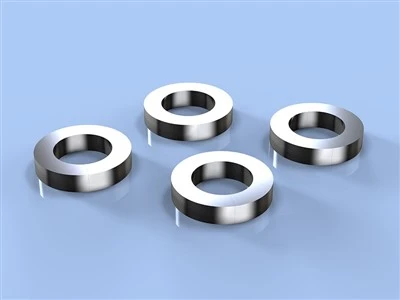
Don’t leave your project relying on generic shapes that don’t fit your needs. If you’re ready to explore crescent neodymium magnets or other custom shape neodymium magnets for your application, reach out to our team to discuss your requirements. We’re here to answer your questions, provide samples, and help you find the right magnetic solution for your needs.
Different Coating Of Neodymium Magnets References
- Campbell, P. (2011). Permanent Magnet Motor Design. John Wiley & Sons.
- Bol, K. (2018). High-Fidelity Speaker Design: Magnetic Materials and Distortion Reduction. Journal of Audio Engineering Society.
- Gutfleisch, O. (2018). Rare Earth Magnets: Materials, Properties, and Applications. Nature Reviews Materials.
- U.S. Food and Drug Administration. (2020). Biocompatible Materials for Implantable Medical Devices. FDA Device Guidance.
- Dorf, R. C. (2018). Introduction to Electric Circuits. Pearson Education.
Zhejiang Guomai Magnetic Material Technology Co., Ltd.
As one of the most professional neodymium magnets manufacturers and suppliers in China, we also support customized service. Please feel free to buy bulk high quality neodymium magnets made in China here from our factory. Welcome to contact us for pricelist.
Address: No.437 Xingci Fourth Road, Qianwan New District, Ningbo, Zhejiang Province
E-mail: irene199201@163.com
WebSite: https://www.gmmagnet.com/
