If you’ve ever stood in a manufacturing control room watching numbers shift on a digital display, or tracked the temperature of a batch of pharmaceuticals as it moves through production, you’ve relied on a temperature transmitter. These devices are the unsung backbone of industrial temperature measurement systems, translating raw temperature data from sensors into a standard, readable signal that control systems, operators, and automation tools can use. As a temperature transmitter supplier, I’ve spent years helping clients cut through confusion about how these devices work, and which type fits their exact needs. Let’s break down the main types of temperature transmitters, their use cases, and what makes each unique. Temperature Transmitter
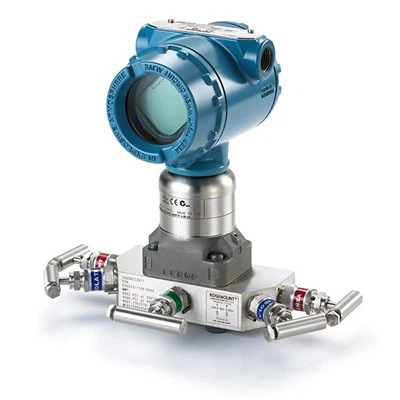
First, let’s get a quick basics check: a temperature transmitter pairs with a temperature sensor (like a thermocouple, RTD, or thermistor) to turn small, often fragile sensor signals into a robust, standardized output. Without the transmitter, a sensor’s weak signal can get lost over long cable runs, or struggle to integrate with modern industrial control systems. Now, onto the types.
The most common classification of temperature transmitters lines up with the sensor they’re designed to work with, because each sensor has its own quirks that the transmitter has to compensate for. Let’s start with RTD Temperature Transmitters. RTDs (Resistance Temperature Detectors) are precision sensors made from materials like platinum, copper, or nickel, whose resistance changes predictably with temperature. They’re most often used in applications where accuracy is non-negotiable: food and beverage processing, pharmaceutical manufacturing, and HVAC. RTD temperature transmitters are built to match the RTD’s 0-1000 ohm resistance range, and they eliminate the biggest error source with RTDs: lead wire resistance. If you run a standard RTD over 10 feet of cable, the small resistance of the wire itself can throw off readings by a few degrees. A 3-wire or 4-wire transmitter cancels that out by measuring resistance change at the sensor end, not the cable end. I worked with a craft brewery last year that switched from basic thermocouple setups to RTD transmitters for their fermentation tanks; they cut temperature measurement error from ±2°F to ±0.5°F, which meant more consistent beer batches and way less product waste from spoiled runs. That’s the kind of tangible impact these transmitters have.
Next up: Thermocouple Temperature Transmitters. Thermocouples are the workhorses of extreme temperature environments, made by joining two different metal wires to create a small voltage that shifts with temperature. They’re used for furnaces, kilns, metal casting, and exhaust systems where temperatures can range from -200°C to over 1800°C. Thermocouple transmitters have a unique challenge: they need to handle the small, millivolt-scale voltage output of thermocouples, plus compensate for cold junction error. A cold junction is the point where the thermocouple wires connect to the transmitter; if that connection isn’t at a known reference temperature, the readings will be wrong. Good thermocouple transmitters have built-in cold junction compensation (CJC) that uses a precision thermistor at the connection point to adjust for that shift. I recently supported a steel fabrication plant that was struggling with inconsistent kiln temperatures because their old transmitters lacked proper CJC; after upgrading to our thermocouple transmitters with high-accuracy CJC, their kiln efficiency jumped 12%, as they could maintain a consistent heat profile for their steel products. Thermocouple transmitters also come matched to specific thermocouple types (Type J, K, T, S, etc.), so you have to pick one that aligns with your sensor—Type K for general high temp, Type S for ultra-precise high-temp applications like aerospace testing, for example.
Then there’s Thermistor Temperature Transmitters. Thermistors are temperature-sensitive resistors, usually made of ceramic or polymer, that have a very sharp, non-linear change in resistance over a narrow temperature range. They’re most popular for low-to-moderate temperature applications where cost is a top priority, like consumer appliances, medical devices, and automotive climate controls. Unlike RTDs and thermocouples, thermistors aren’t built for extreme heat or cold, but they’re extremely accurate in their sweet spot (usually -50°C to 150°C) and much cheaper than RTD-based systems. That said, their non-linear output means the transmitter has a built-in linearization circuit to turn the sharp resistance shift into a smooth, readable signal. I’ve supplied thermistor transmitters to a medical device company that manufactures portable blood analyzers; the low cost and small size of these transmitters fit perfectly with their product design, and the accuracy is more than enough for their use case. They’re not for heavy industrial use, but for smaller, lower-stakes applications, they’re unbeatable.
Another way to categorize temperature transmitters is by their mounting style, which is a practical consideration for installation and maintenance. Head-Mounted Temperature Transmitters, also called field-mount transmitters, fit directly onto the head of a sensor (like a thermocouple or RTD probe) instead of being installed in a control room. This is a huge advantage for reducing wiring costs, because you only run one signal cable (or even a wireless signal) instead of two or three for the sensor and transmitter separately. They’re also protected from dust, moisture, and vibration if they’re rated for industrial use, which makes them ideal for outdoor process facilities, oil refineries, and mining sites. I worked with a mining operation in Wyoming that used to run long cable runs for their mine shaft sensors; switching to head-mounted transmitters cut their installation time by 40% and eliminated 90% of wiring-related signal interference that was causing false alarms.
On the other side are Panel-Mounted Temperature Transmitters, which are installed inside a control panel or enclosure, often paired with multiple sensors in a centralized setup. These are for applications where you have dozens of sensors spread across a facility, and you need to manage all readings in one place. Panel-mounted transmitters can handle multiple input channels, so you can monitor multiple temperatures at once, and they often output signals like 4-20 mA or 0-10 V that work with standard PLCs (Programmable Logic Controllers) and SCADA systems. A food processing plant with 20 different mixing tanks uses panel-mounted transmitters to track every tank’s temperature in their main control room; this setup lets their operators adjust heating and cooling in real time across all units, instead of monitoring each one individually.
Then there’s Wireless Temperature Transmitters, a relatively new category that’s transforming industrial temperature measurement. Instead of hardwiring to a control system, these transmitters use Wi-Fi, Bluetooth, or industrial wireless protocols like HART Wireless or LoRa to send data. They’re perfect for hard-to-reach locations: remote pipeline monitoring, solar farm heat tracking, or equipment in hard-to-access areas where running cables is impractical or too costly. The biggest downside is battery life—most wireless transmitters run on batteries, which need to be replaced every 2-5 years, depending on usage— but the convenience often outweighs that cost. I’ve had clients use wireless temperature transmitters to monitor solar panel temperature across a 50-acre solar farm; they didn’t have to dig trenches for cables, and they get real-time alerts when a panel is overheating, preventing permanent damage that would have cost thousands to fix.
A less common but specialized type is High Temperature Temperature Transmitters, designed for environments where standard transmitters would fail. These are built with materials that can withstand temperatures up to 200°C (and in some cases higher) directly in the sensor head, instead of being mounted in a cooler control enclosure. They’re used for applications like glass manufacturing, cement kilns, and aerospace testing where the transmitter can’t be shielded from extreme heat. Most standard transmitters will stop working if exposed to temperatures over 85°C, so these specialized units are a must for high-heat industrial settings.
Now, let’s talk about signal types, because that’s another key way to distinguish transmitters: analog vs. digital. Analog transmitters output a continuous signal, most commonly 4-20 mA, which has been the industrial standard for decades. The 4 mA point is the minimum (usually corresponding to the lowest temperature measurement range) and 20 mA is the maximum. One big advantage of analog is that it’s simple, works over long cable runs, and is resistant to electrical interference. Digital transmitters use protocols like HART, Modbus, or Foundation Fieldbus to send data as digital signals, which can carry more information than analog—including sensor health status, calibration data, and even multiple temperature readings in one signal. Digital transmitters are more flexible and integrate better with modern automation systems, but they can be more complex to set up. I recommend analog transmitters for older control systems that don’t support digital, and digital for new facilities building out smart manufacturing setups.
As a temperature transmitter supplier, I always tell clients there’s no one-size-fits-all option. The right transmitter depends on three main factors: your sensor type, your temperature range and accuracy needs, and your installation environment. For example, if you’re a pharmaceutical manufacturer needing ±0.2°F accuracy for bioreactors, you’ll want an RTD head-mounted transmitter with cold junction compensation. If you’re monitoring a 1500°C steel furnace, you’ll need a Type K thermocouple transmitter, likely panel-mounted in a control room. If you’re checking solar panel temperatures across a remote farm, go wireless.

If you’re currently dealing with inconsistent temperature readings, frequent calibration issues, or expensive installation, it’s worth evaluating your current transmitter setup. Our team has worked with hundreds of facilities, from small bakeries to large refineries, to match them with the right transmitter to cut costs, reduce waste, and improve process reliability. If you’re ready to discuss your specific needs, connect with our team to learn more about tailored solutions for your operation.
Rosemount Valve Positioner References
- “Temperature Transmitters: A Guide for Industrial Applications,” ISA (International Society of Automation), 2022
- “RTD and Thermocouple Basics,” Omega Engineering, 2021
- “Wireless Industrial Sensors and Transmitters,” Industrial Internet Consortium, 2020
- “Error Sources in Temperature Measurement,” ASHRAE Journal, 2019
Iges Instrument Co., Ltd.
With abundant experience, we are one of the most professional temperature transmitter suppliers in China. Please feel free to buy high quality temperature transmitter in stock here and get quotation from our factory. Good service and low price are available.
Address: No. 103, 1st Floor, Dacheng Commercial Building, Chezhan Avenue, Lucheng District, Wenzhou City
E-mail: igesinst@gmail.com
WebSite: https://www.iges-inst.com/
