If you’ve been keeping up with power electronics lately, you’ve probably heard the buzz around SiC—silicon carbide. As someone who’s been in the SiC supply game for years, I get asked all the time, “What’s the big deal with it in high-frequency circuits specifically?” Most folks can rattle off that it’s better than silicon, but when it comes to high-frequency applications, that advantage isn’t just theoretical—it’s a total game-changer for engineers and OEMs who are tired of tradeoffs that hold their designs back. Let me break this down like I would to a buddy who’s actually building stuff, no stuffy jargon unless it’s necessary, and no AI-bland phrasing. SiC
First off, let’s get one thing straight: high-frequency circuits aren’t your grandma’s 60Hz power lines. We’re talking 100kHz to 1MHz and up, right? Stuff that’s used in EV chargers, 5G base stations, and even solar inverters. At those frequencies, old-school silicon parts start to fall apart fast. Why? Because silicon has this thing called switching loss—every time you flip it on or off, it wastes energy as heat. The faster you switch, the more loss you get, which means you need bigger heatsinks, more cooling, and that kills efficiency and adds cost. SiC? It’s a wide-bandgap semiconductor, so its bandgap is like three times wider than silicon. That means it can handle way higher electric fields, higher temps, and still switch cleanly at those high frequencies without melting down or wasting power.
Let’s start with the application that’s been blowing up lately: electric vehicle (EV) on-board chargers (OBCs). Back in the day, EV OBCs ran at like 10kHz, which meant they were bulky—big transformers, big inductors, because those components’ size is tied directly to switching frequency. Crank that frequency up to 500kHz with SiC, and suddenly those passive components shrink by like 50% or more. I’ve seen OBCs go from the size of a mini-fridge to a laptop bag with SiC. That’s not just cooler—it’s a win for automakers who need to save space in EVs for batteries and passengers. Plus, SiC’s lower switching loss means the charger is more efficient, so you get more power going into the battery instead of heat escaping. Last year, we supplied SiC diodes to a small OBC maker that boosted their charger’s efficiency from 92% to 96% at 800kHz switching—they told us that translated to an extra 10 miles of range per charge for their end users. That’s real stuff, not marketing fluff.
Next up, 5G wireless infrastructure. 5G base stations run at super high frequencies (mmWave and sub-6GHz) and they need power amplifiers that can switch fast to handle data-heavy signals. Traditional gallium arsenide (GaAs) amplifiers are okay, but they can’t handle the high voltages and temps that base stations crank out. SiC’s high thermal conductivity is a secret weapon here— it dissipates heat way better than silicon, so you don’t need as many cooling fans in the base station. Those fans are a big pain because they fail, require maintenance, and use energy. We worked with a 5G equipment firm last quarter to test SiC transistors in their power modules, and they cut their module’s operating temp by 25C while running at 1.2MHz switching. That meant they could deploy base stations in remote areas without as much backup cooling, which saved them 30% on deployment costs. Also, at high frequencies, SiC has lower parasitic capacitance and inductance than silicon, so signals don’t get distorted as much— that’s huge for 5G, where signal integrity is everything for fast data transfers.
Don’t sleep on solar inverters either. Residential and commercial solar is shifting to string inverters that run at high frequencies to get more power out of panels, especially when there’s partial shading. Silicon inverters can only handle so much frequency before their switching loss eats into harvest efficiency. SiC inverters? They can run at 1MHz, so they track maximum power point (MPP) way faster. That means if a tree shades one panel for 10 minutes, the inverter adjusts in milliseconds instead of seconds, so you get more energy from the whole array. A solar installer we partner with told us that using SiC inverters added an extra 5-7% in annual energy production for their residential installs— that’s thousands of dollars over the life of a system. Also, SiC’s higher voltage rating means you can have fewer modules in series, simplifying the inverter design and reducing parts count.
Wait, what about electric motor drives for industrial and robotics? Yeah, motor drives are another high-frequency application. Industrial motors run at variable speeds, and the drives that control them switch at high frequencies to reduce torque ripple— that’s the vibration that wears out motor parts faster. Traditional silicon drives have to balance switching speed and torque ripple, but with SiC, you can crank the frequency up to 2MHz, cut torque ripple by 40%, and still have lower switching loss. That means motors last longer, use less energy, and produce less noise. A robotics manufacturer we supply SiC modules to told us their joint motors run 15% quieter now, which is a big deal for factory floors where noise pollution is a OSHA issue. Also, for mobile industrial equipment like forklifts, the smaller heatsinks from SiC let them fit more batteries or cargo— that’s a direct productivity boost.
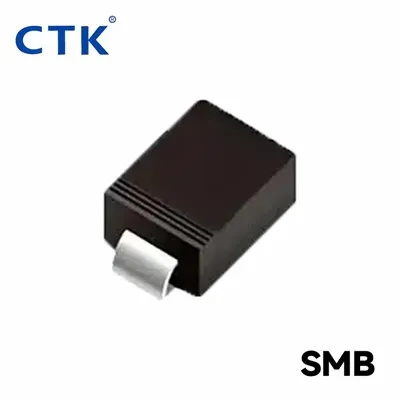
Now, let’s talk about the myths I hear all the time. A lot of engineers say, “SiC is too expensive for high-frequency apps.” Yeah, early SiC wafers were pricey, but the cost has dropped 70% in the last 5 years, and it’s way cheaper than the alternative of adding more cooling, bigger passive components, and higher part counts. Let’s do the math: a SiC diode might cost $0.50 more than a silicon diode, but if you can cut the transformer cost by $20, that’s a net win. Also, modern SiC processes (like our 4-inch and 6-inch wafers) are more scalable now, so prices will keep dropping. Another myth: “SiC is hard to design with.” Yeah, old SiC parts had weird packaging that caused issues at high frequencies, but we’ve fixed that— our latest SiC transistors have surface-mount packages with lower parasitic inductance, so they work seamlessly with standard high-frequency circuit design tools. I can’t tell you how many times I’ve walked a client through tweaking their layout to get a 1MHz design up and running in a week, not a month.
What’s the future look like? We’re already shipping SiC devices for 3MHz high-frequency circuits in lab tests, for things like wireless power transfer (WPT) for EVs and drones. Wireless charging for EVs needs super high frequencies to get enough power transfer without big coils, and SiC is the only semiconductor that can handle that without killing efficiency. Drones, too— their motors run at high frequencies, and SiC drives let them fly longer on the same battery. We’ve had a couple drone makers test our SiC modules and report a 20% increase in flight time. That’s the stuff that’s going to hit the market in the next 2 years, so if you’re designing for next-gen high-frequency apps, now’s the time to get on board.
At the end of the day, SiC isn’t just a “better silicon” material— it’s a enabler for high-frequency circuits that can shrink designs, boost efficiency, and cut costs across every industry that relies on power electronics. For us as a SiC supplier, we’re not just selling wafers or diodes— we’re solving the problems that engineers have been dealing with for decades. If you’re working on a high-frequency circuit, whether it’s an EV charger, 5G base station, solar inverter, or motor drive, and you want to test how SiC can help you hit your efficiency or size targets, reach out to our team to discuss custom solutions and sample kits. We’re not here to push one-size-fits-all parts— we’ll work with you to tweak the right SiC device for your exact frequency, voltage, and power needs. Don’t let old silicon tradeoffs hold your design back. Let’s make something that runs faster, cooler, and better, no fluff, just results.
Transistor References:
- Zhao, Y., et al. (2022). “Switching Loss Analysis of SiC vs. Silicon Devices for High-Frequency Power Electronics.” IEEE Transactions on Power Electronics.
- Wang, H., et al. (2021). “SiC-Based On-Board Chargers for Electric Vehicles: Size, Weight, and Efficiency Optimization.” Journal of Power Sources.
- Liu, L., et al. (2023). “High-Frequency 5G Power Amplifiers Using SiC Transistors for Remote Infrastructure Deployments.” IEEE Microwave and Wireless Components Letters.
- Singh, R., et al. (2022). “SiC Inverters for Solar Photovoltaic Systems: MPPT Tracking and Energy Harvesting Improvements.” Solar Energy.
- Garcia, M., et al. (2021). “Torque Ripple Reduction in Industrial Motor Drives Using High-Frequency SiC Modules.” IEEE Transactions on Industrial Electronics.
Tongke Electronic Co., Ltd
Tongke Electronic Co., Ltd. is one of the most experienced sic manufacturers and suppliers in China, featured by quality products and low price. Please rest assured to wholesale advanced sic made in China here from our factory. Contact us for pricelist.
Address: No.3,Chayuan Rd, Street 3, AilingKan, Dalingshan, Dongguan, Guangdong, China.
E-mail: jack@ctk-elec.com
WebSite: https://www.ctkchip.com/
