When it comes to industrial fluid control, globe valves play a pivotal role. As a reliable globe valve supplier, I’ve seen firsthand how crucial it is for customers to select the right globe valve for their specific applications. In this blog, I’ll share some insights on how to make an informed decision when choosing a globe valve. Globe Valve
Understanding the Basics of Globe Valves
Before delving into the selection process, it’s important to understand the basic function and structure of globe valves. A globe valve is a linear motion valve that regulates the flow of a fluid by means of a disc that moves perpendicular to the seat. This design allows for precise control of the flow rate, making it ideal for applications where accurate throttling is required.
Globe valves consist of a body, bonnet, stem, disc, and seat. The body is the main housing that contains the fluid flow path, while the bonnet provides a closure for the body and houses the stem and disc. The stem is responsible for moving the disc up and down, and the disc is the component that seals against the seat to stop or regulate the flow of the fluid.
Factors to Consider When Selecting a Globe Valve
1. Application Requirements
The first step in selecting a globe valve is to understand the specific requirements of your application. Consider the following factors:
- Fluid Type: Different fluids have different properties, such as viscosity, corrosiveness, and temperature. For example, if you’re dealing with a corrosive fluid, you’ll need a globe valve made from a material that can withstand the corrosive environment, such as stainless steel or bronze.
- Flow Rate: Determine the required flow rate for your application. This will help you choose the appropriate valve size. A valve that is too small may cause excessive pressure drop, while a valve that is too large may not provide accurate flow control.
- Pressure Rating: Consider the maximum pressure that the valve will be subjected to in your application. Select a globe valve with a pressure rating that is equal to or greater than the maximum operating pressure to ensure safe and reliable operation.
2. Valve Size
The size of the globe valve is determined by the nominal pipe size (NPS) or the diameter of the pipe it will be installed in. It’s important to choose the right valve size to ensure proper flow control and minimize pressure drop. A general rule of thumb is to select a valve size that is the same as the pipe size, but in some cases, a smaller or larger valve size may be required depending on the application requirements.
3. Materials of Construction
The materials used in the construction of the globe valve play a crucial role in its performance and durability. Some common materials include:
- Cast Iron: Cast iron is a popular choice for general-purpose applications due to its low cost and good strength. However, it is not suitable for corrosive environments.
- Stainless Steel: Stainless steel is highly resistant to corrosion and is suitable for a wide range of applications, including those involving corrosive fluids. It is also more expensive than cast iron.
- Bronze: Bronze is a good choice for applications where corrosion resistance and good heat conductivity are required. It is commonly used in water and steam systems.
4. Valve Design
There are different types of globe valve designs available, each with its own advantages and disadvantages. Some common designs include:
- Z – Type Globe Valve: This is the most common type of globe valve. It has a Z – shaped flow path, which provides good throttling characteristics but also causes a relatively high pressure drop.
- Y – Type Globe Valve: The Y – type globe valve has a Y – shaped flow path, which reduces the pressure drop compared to the Z – type valve. It is suitable for applications where a lower pressure drop is required.
- Angle Globe Valve: The angle globe valve has an inlet and outlet at a 90 – degree angle. It is commonly used in applications where space is limited or where a change in the direction of flow is required.
5. End Connections
The end connections of the globe valve are used to connect the valve to the pipeline. Common end connections include:
- Flanged Connections: Flanged connections are widely used in high – pressure applications. They provide a strong and reliable connection and allow for easy installation and maintenance.
- Threaded Connections: Threaded connections are suitable for low – pressure applications and small – diameter pipes. They are relatively easy to install but may not be as reliable as flanged connections.
- Welded Connections: Welded connections provide a permanent and leak – proof connection. They are commonly used in applications where a high level of integrity is required.
6. Actuation Method
The actuation method of the globe valve determines how the valve is opened and closed. There are several types of actuation methods available:
- Manual Actuation: Manual actuation is the simplest and most common method. It involves using a handwheel or lever to operate the valve. Manual valves are suitable for applications where the valve needs to be operated infrequently or where automatic control is not required.
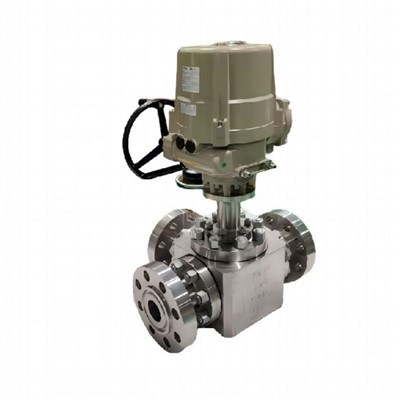
- Electric Actuation: Electric actuation uses an electric motor to open and close the valve. Electrically actuated valves are suitable for applications where remote control or automation is required.
- Pneumatic Actuation: Pneumatic actuation uses compressed air to operate the valve. Pneumatic valves are fast – acting and are commonly used in applications where quick opening and closing are required.
Quality and Reliability
When selecting a globe valve, it’s important to choose a valve that is of high quality and reliable. Look for valves that are manufactured to industry standards, such as ANSI, API, or ISO. A high – quality valve will have better performance, longer service life, and require less maintenance.
As a globe valve supplier, we have a strict quality control process in place. Our valves are fabricated using advanced manufacturing techniques and undergo rigorous testing to ensure they meet the highest standards of quality and performance. We also offer a comprehensive warranty on all our products to give our customers peace of mind.
Cost Considerations
Cost is an important factor to consider when selecting a globe valve. However, it’s important not to compromise on quality for the sake of cost. A cheaper valve may seem like a good option initially, but it may end up costing you more in the long run due to frequent repairs and replacements.
When evaluating the cost of a globe valve, consider the total cost of ownership, which includes the purchase price, installation cost, maintenance cost, and energy cost. A high – quality valve may have a higher purchase price, but it may save you money in the long run by reducing maintenance and energy costs.
Conclusion

Selecting the right globe valve is a critical decision that can have a significant impact on the performance and efficiency of your industrial process. By considering the application requirements, valve size, materials of construction, valve design, end connections, actuation method, quality, and cost, you can make an informed decision and choose a valve that meets your specific needs.
Actuator As a trusted globe valve supplier, we are committed to providing our customers with high – quality valves and excellent customer service. If you’re in the market for a globe valve, we invite you to contact us to discuss your requirements. Our team of experts will be happy to assist you in selecting the right valve for your application and provide you with a competitive quote.
References
- "Valve Handbook" by J. S. Tuzson
- "Industrial Valves: Selection and Sizing" by R. W. Miller
- ANSI/ASME standards for valve design and manufacturing
Wuxi PYNOS Flow-tech Co., Ltd.
As one of the leading globe valve manufacturers and suppliers in China, we offer a wide range of products with superior quality. We warmly welcome you to buy high quality globe valve made in China here from our factory. We also accept customized orders.
Address: Sales Center: 7th Floor, No.19 Qingyuan RD, Wuxi City, Jiangsu Prov., China
E-mail: Info@pynosvalve.com
WebSite: https://www.pynosvalves.com/
