Hey there! As a supplier of Ultra Pure Water Systems, I often get asked this burning question: "How often should the filters in an Ultra Pure Water System be replaced?" Well, it’s not a one – size – fits – all answer, and I’m gonna break it down for you in this blog. Ultra Pure Water System
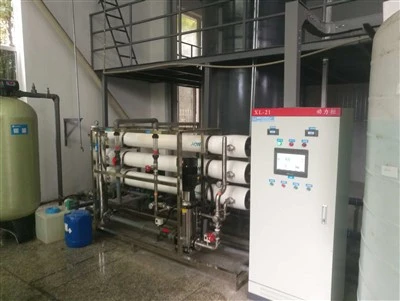
First off, let’s understand why filter replacement is so crucial. Filters in an Ultra Pure Water System are like the guardians of your water quality. They trap all sorts of nasties such as particles, organic compounds, bacteria, and even ions that can mess up the purity of your water. If you don’t replace them on time, these filters can get clogged and lose their effectiveness, which means your ultra – pure water won’t be so pure anymore.
Now, the factors that determine how often you should replace your filters are quite a few.
1. Usage Frequency
If your Ultra Pure Water System is running 24/7 in a busy research lab or a large – scale pharmaceutical manufacturing plant, the filters are gonna work overtime. They’ll accumulate contaminants at a much faster rate compared to a system that’s used only occasionally, say, in a small teaching lab. For high – usage systems, you might need to replace the pre – filters every 1 – 3 months and the final filters every 6 – 12 months. In contrast, a low – usage system could go 3 – 6 months between pre – filter replacements and 12 – 18 months for the final filters.
2. Water Source Quality
The quality of the water you’re starting with makes a huge difference. If your source water is relatively clean, with low levels of sediment, organic matter, and dissolved solids, your filters won’t have to work as hard. For example, if you’re using municipal water that goes through a good treatment process before reaching your facility, the filter lifespan will be longer. On the other hand, if you’re using well water or water from a less – regulated source, the filters will get dirty faster. You could be looking at replacing the pre – filters every month or so and the final filters every 3 – 6 months.
3. Type of Filters
Ultra Pure Water Systems usually have different types of filters, each with its own job and replacement schedule.
- Pre – filters: These are the first line of defense. They catch larger particles like sand, rust, and debris. Sediment pre – filters need to be replaced more frequently because they get blocked easily. Usually, they can last anywhere from 1 – 3 months depending on usage and water source.
- Activated carbon filters: They remove organic compounds, chlorine, and some odors. Their lifespan is typically 3 – 6 months. As they adsorb more and more contaminants, their capacity to do the job diminishes.
- Reverse osmosis (RO) membranes: These are high – tech filters that remove a wide range of contaminants, including ions. RO membranes can last 2 – 3 years, but this can vary based on factors like water hardness, temperature, and the presence of chemicals.
- Polishing filters: These final filters are responsible for getting the water to ultra – pure levels. They’re very sensitive and usually need to be replaced every 6 – 12 months.
4. System Monitoring
Modern Ultra Pure Water Systems come with built – in monitoring tools. These can tell you things like the pressure drop across the filters, the flow rate of water, and the quality of the output water. A significant increase in pressure drop indicates that the filter is clogged and needs replacement. Similarly, if the water quality starts to decline, it might be time to change the filters. By keeping an eye on these parameters, you can get a better idea of when to replace the filters.
Some General Guidelines
Based on all these factors, here are some general ballpark figures for filter replacement:
-
Light usage and good water source:
- Pre – filters: Every 3 – 6 months
- Activated carbon filters: Every 6 – 12 months
- RO membranes: Every 2 – 3 years
- Polishing filters: Every 12 – 18 months
-
Heavy usage and poor water source:
- Pre – filters: Every 1 – 2 months
- Activated carbon filters: Every 3 – 6 months
- RO membranes: Every 1 – 2 years
- Polishing filters: Every 6 – 12 months
The Consequences of Not Replacing Filters on Time
Not replacing your filters when you should is a bad idea. If the pre – filters are clogged, it can put extra strain on the other components of the system, like the RO membranes. This can lead to premature failure of these more expensive parts. A reduction in water quality can also affect your end – use applications. For instance, in a semiconductor manufacturing process, impure water can cause defects in the chips. In a medical lab, it can lead to inaccurate test results.
How We Can Help
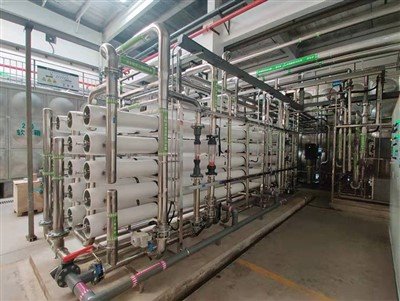
As an Ultra Pure Water System supplier, we’ve got you covered. Our systems are designed to be user – friendly and efficient. We can provide you with the right filters for your specific needs and usage. Our team of experts can also help you set up a filter replacement schedule tailored to your situation. We offer training on how to monitor your system and recognize when it’s time for a filter change.
Ultrasonic Parts Washer If you’re in the market for a new Ultra Pure Water System or just need some advice on filter replacement for your existing setup, don’t hesitate to reach out. We’re here to make sure you get the purest water possible for your operations. Contact us to start a discussion about how we can meet your ultra – pure water requirements.
References
- "Principles of Water Treatment" by American Water Works Association
- "Water Quality and Treatment" by the Drinking Water Research Foundation
- Technical manuals provided by leading Ultra Pure Water System manufacturers
Shenzhen Jkon Environmental Protection Technology Co., Ltd.
As one of the most professional ultra pure water system manufacturers and suppliers in China, we’re featured by quality products and good service. Please rest assured to buy customized ultra pure water system made in China here from our factory. Contact us for more details.
Address: Shanghenglang Industrial park, Daloang Street, Longhua District, Shenzhen, China
E-mail: sales@jkontech.com
WebSite: https://www.jkontech.com/
