When I first started out as a dry mortar production line supplier, I fielded a lot of questions that made me realize how misunderstood customization is in our industry. A contractor in Texas once called me, frustrated because off-the-shelf lines were either too small for his residential mix jobs or too limited to handle the specialty grouts he used for commercial tile projects. “Why can’t I just get a line that fits exactly what I need?” he asked. That question stuck with me, because it’s one I hear again and again: Can a dry mortar production line be customized? The short answer is yes—but not just in the way many people think. Customization here isn’t about building something out of thin air; it’s about aligning every part of the line with your specific operation, and that’s what makes all the difference between a line that works and one that works for you. Dry Mortar Production Lines

Let’s break down what customization actually means for dry mortar production lines, because it spans way beyond just the size of the mixer. Most production lines consist of raw material storage, dosing systems, mixing units, blending equipment, packaging stations, and control systems—each of these components is a potential point of customization. For example, a small independent masonry supply company might only produce two main mixes: general-purpose mortar and thin-set adhesive. For them, customizing could mean a modular line that fits into a 20×30 foot space, instead of a standard 40×60 foot line that would leave half their facility unused. On the flip side, a large precast concrete plant might need a line that can switch between 10 different specialty mortars in a single run, so custom dosing scales that can adjust to minute quantities of additives are non-negotiable.
What many buyers don’t realize is that customization starts with understanding their own production volume and mix requirements first. Let’s talk about raw material handling, for instance. If a plant sources bulk cement from a local quarry, they might need customized screw conveyors that move cement from ground-level storage silos up to the mixer, with dust extraction ports placed exactly where their existing silo outlets are. If a plant uses a mix of bagged additives, like polymers and fibers, they might need a custom automated weighing system that can unload and dose these bagged materials without manual labor. I worked with a plant in Ohio last year that used recycled fly ash as a partial cement substitute, which is lighter than standard cement. Their original screw conveyors kept clogging because the lighter material wouldn’t flow evenly, so we redesigned the flights on the conveyors and added vibration mechanisms specific to their fly ash, cutting their downtime from 2 hours a day to 15 minutes. That’s the kind of customization that doesn’t show up in a catalog—it’s tailored to your specific inputs.
Mixing technology is another big area where customization pays off. Standard twin-shaft mixers work well for most general mortars, but if you’re producing grouts that need high flowability or specialty tile adhesives that require uniform fiber dispersion, you need a mixer that’s built for that. A few years ago, I had a customer in Florida who produced large-format tile adhesives that required 12mm glass fibers to be evenly distributed without clumping. Our standard mixer couldn’t handle that, so we custom-designed a mixing chamber with adjustable shear levels and a secondary mixing stage specifically for fiber incorporation. The result was a product with 30% less fiber clumping, and they could now supply to 10 more commercial tile contractors in the region. That’s the difference between a one-size-fits-all mixer and a custom one that solves a real production problem.
Packaging is often the most overlooked part of a production line, and that’s where customization can have the biggest impact on your bottom line. Some small plants sell their mortar in 50-pound paper bags, while others sell in 1-ton bulk super sacks, and some even offer bagless bulk delivery to job sites. For a plant that serves both residential and commercial customers, a custom packaging system that can switch between bagging and bulk loading in less than 10 minutes is a game-changer. I recently worked with a customer in California that sold 60% of their product in bulk to large construction projects and 40% in bags to homeowners. Their original line only did paper bagging, so they were renting a separate bulk loading system at a cost of $12,000 a month. We customized their packaging end to include both a bagging unit and a bulk loading spout, with a single control panel that lets them switch between modes. That customization paid for itself in 8 months.
But here’s the thing about customization: it’s not just about adding parts—it’s about integrating the line with your existing infrastructure. A lot of buyers come to me thinking customization means making the line bigger, but sometimes it’s about making it work with what they already have. For example, if your plant has an old electrical system that can’t support a new line, we don’t just sell you a bigger control panel—we customize the power distribution to match your existing voltage and wiring, so you don’t have to pay for a full electrical overhaul. Or if you have a covered loading dock that’s only 10 feet high, we can customize the height of the discharge chute so trucks can load without having to modify their trailers. That’s practical customization, not just theoretical.
Of course, there are limits to what’s possible with customization—and that’s a good thing. A reputable supplier won’t promise you a line that breaks industry standards or skips on safety. For example, we can customize the capacity of a line, but we still have to adhere to OSHA guidelines for dust extraction and mixer guarding. We can adjust the mix ratios, but we use the same material science principles that ensure the final mortar meets ASTM standards. The best part of working on custom projects is that you still get a line that’s compliant, but tailored to your unique needs.
I also want to talk about lead times, because that’s a common concern when it comes to customization. Buyers often assume a custom line will take twice as long to build as a standard one, but that’s not always true if the supplier has a modular approach. At our company, we use a base set of components—mixer sizes, control systems, storage silos—and adjust the variables around that. For a plant that needs a minor tweak, like a custom dosing scale, lead time might only be 2 weeks longer than a standard line. For a full line custom-built for a new plant with specific production requirements, lead time is around 12 weeks, which is only 4 weeks longer than a standard line. That’s because we’re not starting from scratch every time—we’re building on proven components and adjusting to your needs.
Let’s also address a myth I hear all the time: that custom lines are way more expensive than standard ones. It’s true that some customizations add cost, but they often save you money in the long run. Let’s go back to the Ohio plant I mentioned earlier. They could have bought a standard line and added a separate conveying system for fly ash, which would have cost $25,000 in extra equipment and $8,000 a year in maintenance from clogs. The customized conveying system we built cost $18,000 up front, and their maintenance costs dropped by $6,000 a year. Another customer in Texas thought a standard line would cost $50,000 less, but when we looked at their production, they would have had to run two shifts to meet their demand, adding labor costs of $40,000 a year. A custom line with a higher capacity, built to handle their mix, cost only $15,000 more up front and cut their labor costs by $35,000 a year. Customization isn’t always cheaper, but it’s almost always a better investment than forcing your operation to fit a pre-made line.
So how does the custom process work, anyway? For us, it starts with a site visit or a detailed questionnaire where we ask you about your production volume, the types of mortars you make, your raw materials, your facility layout, and your long-term growth plans. Then our engineering team puts together a custom design, with 3D renderings so you can see exactly how the line will fit in your space. We go over every component, explain how the customization will solve your specific challenges, and provide a detailed timeline and cost breakdown. Once you approve the design, we build the line, test it in our facility to make sure it works as intended, ship it to your site, and handle installation and training. That’s the process, and it’s designed to make sure you end up with a line that works for you, not the other way around.
I recently finished working with a new customer in Arizona who’s a family-owned business with 20 employees. They started small, making mortar for local repair jobs, but they just landed a contract to supply a 100-home development. Their original plan was to buy a standard line that could make 10 tons an hour, but when we looked at their needs, they only needed 6 tons an hour, and they had a small facility that couldn’t fit the standard line. We customized a modular line that fit exactly into their 20×25 foot space, with a dosing system tailored to their mix, and a packaging unit that works with their existing palletizer. The whole process took 10 weeks, and they’re on track to meet their contract without expanding their facility or taking on extra labor. That’s exactly what customization is for: helping small businesses grow without outgrowing their resources.
If you’re reading this and wondering if a custom line is right for you, here’s a quick checklist. First, do you have unique mix requirements that standard lines can’t handle? Second, is your facility layout too small or awkward for a pre-made line? Third, are you paying extra for add-ons that you’d need to make a standard line work for your operation? If you answered yes to any of these, then customization is probably worth exploring.
At the end of the day, a dry mortar production line is a big investment—financially and operationally. You need something that will produce consistent, high-quality mortar, reduce downtime, and help you grow your business. Off-the-shelf lines work great for some operations, but if they don’t fit your specific needs, they’ll become a bottleneck that slows you down. That’s where customization comes in: it turns a production line from a generic piece of equipment into a tool that’s built for your success.
Whether you’re a small operation just getting started, a mid-sized plant looking to expand your product line, or a large facility upgrading your equipment, customizing your dry mortar production line is not only possible—it’s often the smartest choice for your business. If you’re ready to talk about what a custom line would look like for your operation, our team is here to help. We’ll walk through your needs, answer your questions, and design a line that works for you, no matter your production goals or facility constraints. Just reach out to our team to start the conversation about customizing your dry mortar production line today.
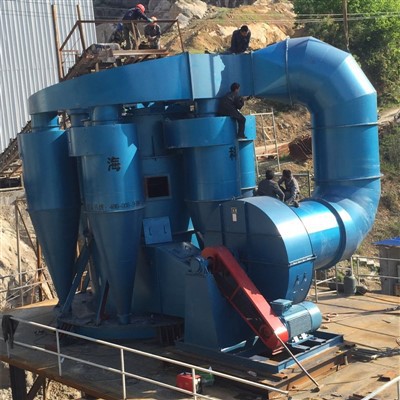
Dust Collectors References
- American Society for Testing and Materials. (2022). Standard Specification for Mortar for Masonry Units (C270). ASTM International.
- Occupational Safety and Health Administration. (2021). Safety and Health Regulations for Construction (29 CFR Part 1926). U.S. Department of Labor.
- National Ready Mixed Concrete Association. (2023). Dry Mortar Production Guidelines and Best Practices. NRMCA Publications.
- Construction Specifications Institute. (2022). Dry Mortar Production and Installation Standards. CSI Manual of Practice.
Jiangsu Haike Environmental Tech Co., Ltd.
As one of the most professional dry mortar production lines manufacturers and suppliers in China, we’re featured by quality products and good service. Please rest assured to wholesale customized dry mortar production lines at competitive price from our factory. Contact us for quotation.
Address: No.1, Wei’er Branch Road, Shanggang Industrial Park, Jianhu County, Yancheng City, Jiangsu Province, China
E-mail: 17388487000@163.com
WebSite: https://www.jshkhbwm.com/
