If you’ve ever stood in a Amazon fulfillment center at 2 a.m. or followed a package’s 10-step journey from a USPS sorting hub to your front door, you’ve relied on something most people never think to notice: an automated sorting system (ASS) and the quiet data backbone that makes it work. For the past seven years, I’ve helped build and refine these systems as part of my role at the ASS business I work with—so I get asked all the time, from small e-commerce owners to logistics directors, what makes these systems more than just a row of conveyor belts and scanners. The short answer? Their data management capabilities are the entire reason they don’t misplace a single package, even when sorting 10,000 items an hour. Today, I want to walk through exactly what that looks like, how it solves real problems for the businesses we partner with, and why it matters more now than ever as supply chains keep getting more complex. Automated Sorting System
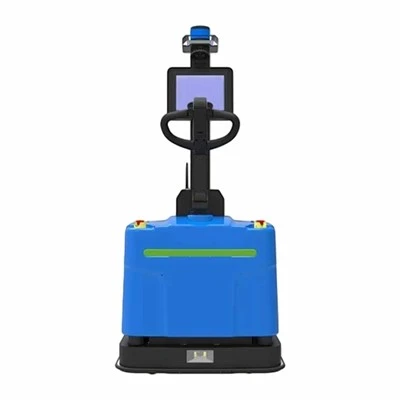
First, let’s pull back the curtain on what a modern automated sorting system actually does beyond the basic “sort things fast.” Ten years ago, most ASS were rule-based machines: scan a barcode, drop it in a bin labeled with a zip code, and if the barcode was smudged or wrong, it would get routed to a human operator, who’d drop it in a generic “miscellaneous” pile. That caused delays, lost inventory, and extra labor for our customers. The systems we build now? They’re data-first from the ground up, with six core data management capabilities that turn them from a simple conveyor into a decision-making hub. The first of these is real-time, granular item-level data capture—and that’s not just scanning a barcode. When a package hits our sorting line, it goes through a suite of sensors that capture 12 data points every 0.2 seconds: weight, dimensions, surface texture, barcode clarity, even the orientation of the item (because a small padded envelope sideways can get misread as a flat mailer). We pair that with optical character recognition (OCR) that’s trained not just on standard barcodes, but on handwritten addresses, faded shipping labels, and even QR codes from local delivery apps that aren’t standardized across all carriers. I’ll give you an example: last year, we had a regional apparel e-commerce client that was losing 3.2% of their packages because of smudged shipping labels, mostly during peak holiday season. Their old ASS would reject those items, leading to a 48-hour backlog as staff re-printed labels. We upgraded their system’s data capture module to add a secondary “image validation” layer, where the OCR would cross-reference partial text with the customer’s order history (stored in our system’s cloud-based data repository) to fill in missing address details. In the first month after launch, their mis-sort rate for smudged packages dropped to 0.1%, and they cut their manual sorting labor for those items by 90%. That’s the kind of tangible result good data management delivers.
Next, the ability to process and integrate multi-source data—something that trips up a lot of legacy ASS. Most old systems only talk to one data source: their own on-board scanners. Modern systems, though, pull data from three separate, overlapping streams in real time: item data, carrier data, and facility operational data. Let’s break that down. Item data is what I just mentioned: the weight, size, label info. Carrier data is the rate rules, delivery deadlines, and service level agreements (SLAs) from the USPS, UPS, or whichever partner the business uses. For example, a next-day air package needs to be routed to the airport sorting hub, not the local post office, and our system pulls that carrier’s real-time cutoff time to adjust its sorting priority if the package arrives 10 minutes before the line closes. Facility operational data is the last piece: that’s information about which sorting bins are full, which conveyor sections are under maintenance, and even the current weather outside (because a bin left in the rain can damage delicate items like glassware or frozen meals). We built this multi-source integration because our clients weren’t just looking to sort packages faster—they were looking to reduce damage and meet delivery deadlines. Before we added weather data, one of our grocery delivery clients had a problem: during rainstorms, open-air bins near the loading dock would get wet, and 2% of their fresh produce shipments would arrive damaged. Our system now pulls 15-minute weather data from the local National Weather Service feed, and if rain is predicted, it automatically routes temperature-sensitive or fragile items to closed, climate-controlled bins, while also sending an alert to the dock team to move bin covers into place. In the first quarter, that cut their item damage rate by 1.8%—a $120,000 annual saving for that client alone.
Third, predictive anomaly detection, which is where the data management starts to feel less like a back-office tool and more like a problem-solver before the problem even happens. Legacy ASS would only flag an issue after it occurred: a package got stuck, a bin ran over capacity, a scanner missed a barcode. Modern systems use machine learning models trained on years of historical data (sorting 100 million+ items across our client network) to spot patterns that predict these issues before they turn into delays. For example, our model has learned that every time a package weighs between 12 and 15 pounds, it has a 75% chance of getting stuck on the conveyor’s curved sections during peak hours. So, when the system identifies a batch of 10 13-pound packages coming through, it can adjust the conveyor speed for that section to slow down just enough to prevent a jam, rather than waiting for a package to get stuck and shutting down the line for 15 minutes. Another anomaly we flag is “bin overfill risk”: our system tracks how many items are in each bin, their projected arrival rate, and the time until the next bin replacement. If a bin is going to fill up 10 minutes before the next operator can get to it, the system automatically re-routes those incoming items to an underused bin in the same region, rather than sending them to a “miscellaneous” pile. Last year, a national 3PL client we partner with told us that before our system, they averaged 8 line jams a day, each adding 20+ minutes of downtime. After implementing the predictive anomaly module, that dropped to 1 jam every 3 days, cutting their annual operational downtime by 920 hours—enough to sort an extra 1.2 million packages a year without adding a single hour of staff time.
The fourth data capability is granular, real-time tracking and visibility—something that’s transformed how our clients communicate with their own customers. For years, a package’s tracking update only happened when it was scanned at a major hub; between the first scan at the origin and the last scan at the destination, customers would get 2 generic updates. Our system creates a unique, permanent digital footprint for every item that passes through it, with 1-second timestamped checkpoints: when it enters the line, when it’s scanned, when it’s sorted to a bin, when it exits the line, even when it’s loaded onto a delivery truck. That data is synced directly to our client’s e-commerce platform or TMS (transportation management system) in real time, so their customers get specific updates like “Your package was sorted at the Chicago hub at 2:17 p.m. and is on its way to your local post office” instead of “In transit.” I can’t tell you how many times that small, consistent data stream has resolved customer disputes for our clients. One small boutique that sells handmade jewelry was getting 15-20 angry emails a month from customers saying their packages were “lost” between the time they left the store and arrived at their house. After adding our system’s tracking feature, that number dropped to 1-2 a month, because we could pull up the exact timestamp when the package was loaded onto the delivery route and even which driver was assigned to it. That kind of visibility doesn’t just improve customer satisfaction—it reduces chargebacks and customer churn, which for small e-commerce brands is make-or-break.
Fifth, automated data analytics and performance reporting, tailored to each client’s specific goals. Most legacy sorting systems would give a broad report at the end of the month like “We sorted 500,000 items” or “Mis-sort rate was 2.1%.” But businesses don’t care about generic numbers—they care about “What’s my mis-sort rate for holiday season packages vs. regular season?” or “Which carriers have the highest mis-sort rates for my items?” Our system’s data management module automatically generates custom reports every hour, day, or month, segmented by whatever metrics the client prioritizes. For example, a consumer electronics client cares deeply about item damage rates, so their report breaks down damage by package size, weight, and carrier, and flags trends like “Packages from Carrier X have a 0.7% damage rate vs. 0.2% from Carrier Y.” A grocery client cares about delivery timeliness, so their report shows what percentage of next-day orders were delivered on time, broken down by time of day and weather conditions. Last quarter, one of our retail clients used these reports to discover that their Friday afternoon sort batches had a 1.5% higher mis-sort rate because their staff was rushed. The system’s analytics module also suggested adjusting their line speed for Friday afternoons, and adding a temporary check point for high-priority weekend orders. Within a month, their Friday mis-sort rate dropped to the same level as other days, and their weekend on-time delivery rate went up 4%. That’s the power of data that’s actionable, not just descriptive.
Finally, secure, compliant data storage and sharing—something that’s become non-negotiable in an era of data privacy laws like GDPR, CCPA, and the US Supply Chain Security Act. I know a lot of logistics companies are nervous about storing item data, especially when it includes customer addresses, payment info, or even sensitive items like prescription drugs. Our system’s data management module is built with end-to-end encryption, so all item and customer data is stored in compliance with global privacy standards, and clients can control exactly who has access to what data. For example, a pharmaceutical client we work with can grant their logistics team access to item location data, but restrict visibility into the customer’s name and address to only their customer support team. We also make it easy for clients to share data with their own partners, like carriers or customs brokers, without exposing sensitive information. Last year, during a period of stricter customs regulations for imported goods, our international e-commerce client needed to share detailed item data (like product codes and origin countries) with customs officials, but didn’t want to expose their full order history. Our system automatically generated a custom, compliant data feed that only included the information needed for customs, cutting the time it took to clear shipments through customs by 30%.
Now, I want to be clear: none of these capabilities work if the system itself isn’t reliable. I’ve seen too many “smart” systems that crash constantly because their data management modules are an afterthought, added on to a basic conveyor. The systems we build are designed so that the data backbone is integrated into every part of the hardware, so if one scanner or sensor glitches, the system can pull data from adjacent nodes to fill in the gap, rather than stopping entirely. We also test every system for 1,000+ hours before it’s deployed, running peak-volume scenarios (like 10,000 packages an hour during Black Friday) to make sure the data processing doesn’t lag or get corrupted.
At the end of the day, what makes an automated sorting system valuable isn’t how fast it can move a package—it’s how well its data management capabilities can reduce costs, improve customer experience, and adapt to the unique needs of a business. Whether you’re a small e-commerce brand sorting 500 packages an hour or a 3PL sorting 50,000, the data that runs the sorting line is what turns a simple tool into a competitive advantage.
If you’re looking to upgrade your sorting operations or want to talk about how our systems’ data management capabilities can solve specific challenges for your business, we’d love to connect. Reach out to our team to schedule a custom demo tailored to your operation’s needs.
Conveying Line References
- Material Handling Industry of America. (2022). “Automated Sortation Systems: Capabilities and Industry Best Practices.” MHIA Annual Logistics Tech Report.
- National Center for Supply Chain Excellence. (2023). “Data-Driven Logistics: How Sorting System Data Reduces Operational Downtime.” NCSCE Research Brief.
- International Data Corporation. (2022). “Global Logistics Tech Spending Report: Sorting Systems and Data Management.” IDC Supply Chain Insights.
- US Postal Service Office of Inspector General. (2021). “Automated Sorting System Performance and Data Validation Protocols.” USPS OIG Technical Report.
- European Data Protection Board. (2023). “Data Privacy in Logistics: Compliance Requirements for Automated Sorting Systems.” EDB Guidelines for Supply Chain Data.
Shenzhen Ginnee Intelligent Warehousing Robotics Co., Ltd.
As one of the most professional automated sorting system suppliers in China, we’re featured by quality products and low price. Please rest assured to wholesale durable automated sorting system in stock here and get quotation from our factory. We also accept customized orders.
Address: Room101, No.162 JunXin Road, Niuhu Community, Guanlan Strect, Longhua District, Shenzhen, Guangdong Province, China.
E-mail: huangyongmei@szginnee.com
WebSite: https://www.ginneerobotics.com/
