Let me start by saying something that might surprise you: when I first got into the milling cutting supply business 12 years ago, I would have told you complex shapes were reserved for only the most advanced 5-axis machining centers and a handful of specialized technicians. Back then, our team would get calls from aerospace, automotive, and medical part makers, all asking the same question: “Can milling cutting actually handle a part that’s not a simple block or cylinder?” More often than not, we’d have to point them toward alternative processes—EDM, casting, even 3D printing—with a tinge of frustration because I knew our milling tools were capable of more than we were showing. Today? That’s the core of what we do, and if you’re wondering whether milling cutting can pull off complex shapes, the short answer is a resounding yes. But let’s get into the gritty details, because it’s not just “yes”—it’s a story of tool innovation, machine integration, and the kind of on-the-ground problem-solving that comes from spending every day in the supply trenches. Milling Cutting
First, let’s define what we mean by “complex shapes” here, because that term gets thrown around a lot. For a lot of our clients, it’s not just a part with curves—though that’s part of it. It’s an aerospace turbine blade with twisted airfoils that have to maintain micron-thick tolerances across every surface, so airflow efficiency doesn’t drop by even a fraction. It’s a custom medical implant, like a titanium hip stem, that has to match a patient’s unique anatomy down to the millimeter, with porous surface textures to help bone grow in. It’s an automotive gearbox housing with internal geometries that would require multiple setups and tool changes if you used a simpler process, leading to wasted time and inconsistent quality. When those clients first reach out, most of them are stuck thinking milling is only for flat surfaces or basic holes, and that complex shapes need a different, more expensive process. That’s where our work comes in: proving them wrong with tools and expertise tailored specifically to those exact challenges.
Let’s talk about the tools themselves, because that’s where a lot of the magic happens. Early on, standard end mills would have long flutes that flexed if you tried to cut a curved or contoured surface, leading to chatter, uneven cuts, and parts that were out of tolerance. But over the last decade, our team has worked directly with machining engineers to develop custom milling cutters that solve these exact problems. Take, for example, ball nose end mills—these are the workhorses of complex contouring, right? But not all ball nose mills are the same. We supply variable-helix ball nose cutters, where the flutes have slightly different helix angles along their length. That prevents the harmonic chatter that plagues standard ball noses when you’re machining a highly twisted airfoil or a deep, contoured mold cavity. We also offer taper-shank ball nose mills for applications that require reaching into tight, deep pockets—think a mold for a complex automotive body panel, where the part has sharp, narrow crevices that a straight-shank tool can’t access without damaging the surrounding material.
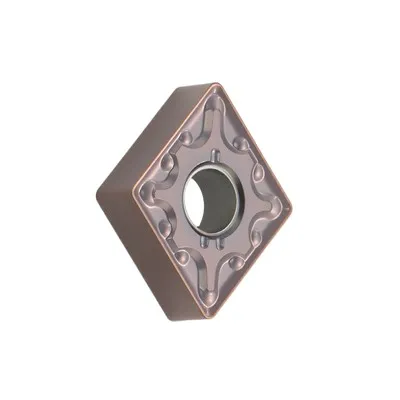
Another key tool innovation we’ve embraced is indexable contouring inserts. A lot of people still think indexable inserts are only for roughing, but modern multi-radii inserts are designed specifically for finish-machining complex shapes. These inserts have customized edge profiles that can follow the exact curvature of a part without leaving witness lines—those tiny, annoying ridges that you’d normally have to hand-polish, which adds time and cost. For a medical implant, witness lines aren’t just a nuisance—they can catch on tissue, leading to complications down the line. That’s why our team works with medical device makers to match insert radii to their exact CAD models, so the milling process leaves a surface that’s ready for anodizing or direct sterilization, no handwork required.
Now, tools don’t do all the work on their own—you have to integrate them with the right machining strategy, and that’s where our role as a supplier goes beyond just shipping parts. Early in my career, I’d get a call from a client who bought a high-end 5-axis mill, but they were still programming with old 3-axis software, so they were only using a fraction of the machine’s capability. They’d spent hundreds of thousands of dollars on equipment, but they were still cutting simple blocks because they didn’t know how to program for complex shapes. That’s why we started offering free on-site programming consultations for our key clients—small manufacturers that can’t afford a full-time machining engineer on staff. Last year, we worked with a 15-person automotive parts shop in Detroit that had just won a contract for custom electric vehicle (EV) motor brackets with internal helical gears and contoured cooling channels. They’d tried using a 3-axis mill and standard end mills, and they were missing tolerance on 20% of their parts, costing them thousands in scrap each month. We walked them through a 5-axis contouring program that used our variable-helix end mills, adjusted their feed rates and spindle speeds to match the titanium alloy they were cutting, and within two weeks, their scrap rate dropped to less than 1%, and they met their delivery deadline three weeks early. That’s the kind of impact we get to see, and it’s what makes this job worth it.
Wait, but what about materials? A lot of complex parts are made from tough stuff—titanium, Inconel, hardened steel—that’s notoriously hard to machine. Can milling cutting handle complex shapes in these materials, or do you have to switch to EDM? The answer is yes, milling can, but it requires the right combination of tool geometry, coating, and machining parameters. Take Inconel 718, a superalloy used in jet engines that’s almost impossible to machine with anything but the most specialized tools. Last year, we supplied a set of our diamond-coated ball nose end mills to an aerospace client that was machining complex turbine blade cores from Inconel. They’d been using EDM, which takes hours to cut a single blade and leaves a recast layer on the surface that requires additional finishing. Our mills cut the same blade in 45 minutes, left a surface finish of Ra 0.8 μm, and eliminated the need for post-machining polishing. The client told us that this single change let them increase their turbine blade production by 30% and reduce their per-part cost by 25%—that’s a game-changer for a industry where every part has to be perfect for safety.
But it’s not just high-end aerospace or medical parts—smaller shops are using milling for complex shapes too, and that’s a segment we’ve focused on heavily. A lot of our clients are small to medium-sized manufacturers that can’t afford 5-axis mills, so they use 3-axis machines with rotary tables. With the right tooling and programming, even a 3-axis setup can produce complex shapes. For example, a custom furniture maker we work with uses our tapered ball nose end mills to carve intricate, curved wooden chair legs and decorative panels from solid walnut and maple. They don’t have a 5-axis machine, but they program their rotary table to rotate as the mill moves along the contour, and the variable-helix tools prevent chatter even when they’re cutting deep, narrow curves. For them, milling is not just more affordable than other processes—it lets them create custom, one-of-a-kind parts that would be impossible to make with casting or 3D printing, which can have layer lines or material inconsistencies.
Of course, it’s not all smooth sailing. There are limits, and we’re honest with our clients about that. Milling cutting for complex shapes works best when you plan for it in the design phase. A lot of clients come to us with a CAD file of a complex part they designed, and they want us to just send them tools that can cut it—without thinking about tool access or clearance. For example, if a part has an internal cavity with walls that are only 5mm thick and 100mm deep, a standard straight-shank mill won’t reach in without hitting the opposite wall, leading to tool breakage or part damage. In that case, we’ll recommend a smaller-diameter tool or a tapered shank, and we’ll work with their machinist to adjust the tool path so the cutting edges don’t collide. We always emphasize that the best results come from collaboration early on, not after a client has already spent time and money on a bad setup.
Another challenge is tolerance. When you’re cutting complex shapes, even a small error in tool positioning or tool wear can throw the entire part out of spec. That’s why we supply tools with consistent geometry—each end mill we ship has a runout of less than 0.002mm, so the cutting edges are perfectly aligned, which is critical for maintaining tight tolerances on curved surfaces. We also offer tool monitoring services for our key clients, where we track tool wear in real-time using sensor technology, so they can replace a tool before it starts cutting parts out of tolerance. For a medical implant that requires ±0.01mm tolerance, that level of precision is non-negotiable, and it’s something we’ve built our reputation on.
Let me share a recent example that really sums up what this is all about. A few months ago, we got a call from a startup that makes custom orthopedic skull implants for trauma patients. Each implant is unique, tailored to the patient’s exact skull shape from a CT scan. The startup had been using 3D printing to make the implants, but the plastic prototypes didn’t have the strength they needed for final titanium implants, and they were frustrated that 5-axis milling was too expensive for a startup with a small budget. We worked with them to adapt our standard ball nose end mills with a new coating that’s optimized for titanium, and we helped them program a 3-axis mill with a rotary table that could follow the complex contour of the skull. The first prototype they made had a surface finish that matched 3D printing, but it was 10 times stronger, and it cost half as much as a 5-axis milled implant. They just secured a contract with a hospital network for 500 implants a year, and we’re their exclusive milling tool supplier. That’s the kind of story that makes all the late nights in the shop and all the hours spent troubleshooting worth it.
So to circle back to the original question: Can milling cutting be used for complex shapes? The answer is a definitive yes, but it’s not just about the tool—it’s about the partnership between the supplier, the machinist, and the designer. It’s about understanding that complex shapes don’t have to be relegated to specialized processes, and that with the right tooling and expertise, you can get the precision, cost-efficiency, and quality you need for almost any part.
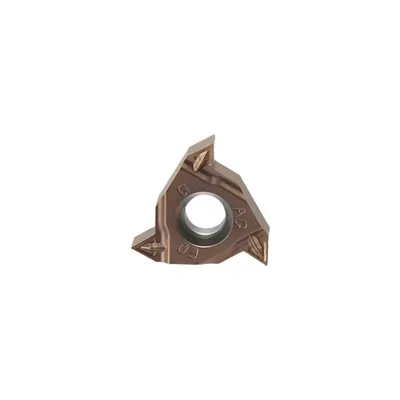
If you’re a manufacturer, a designer, or a machinist working on a project that you’ve thought needs a “too complex for milling” shape, I want you to reach out. We’ve worked on parts ranging from tiny medical implants to large aerospace components, and we’ve probably solved a problem just like yours. We don’t just sell tools—we provide solutions, whether that’s recommending a custom insert, adjusting a programming strategy, or helping you troubleshoot a tough setup. Don’t write off milling cutting for complex shapes before you talk to someone who’s been in the trenches, working with these tools every day. We’re here to help you turn your complex design into a finished part that meets every requirement, on time and on budget.
MGR Small Boring Tool References
- “Milling of Complex Surfaces: Tooling and Process Optimization,” Journal of Manufacturing Processes, Vol. 42, 2020.
- “Advances in Indexable Contouring Inserts for High-Precision Machining,” International Journal of Machine Tools and Manufacture, Vol. 58, 2018.
- “5-Axis Machining for Complex Aerospace Components,” Aerospace Manufacturing and Design Magazine, 2021.
- “Milling of Medical Implants: Surface Finish and Tolerance Requirements,” Journal of Biomedical Materials Research, Part B: Applied Biomaterials, Vol. 107, 2019.
Small Craftsman (Shandong) Machine & Tools Co., Ltd.
Small Craftsman (Shandong) Machine & Tools Co., Ltd. is one of the most experienced milling cutting manufacturers and suppliers in China, also supports customized service with low price. Please feel free to buy bulk high quality milling cutting in stock here from our factory. Contact us for pricelist.
Address: No.9 Quanxin Rd., Sishui Economic Developing Zone, Jining, Shandong, China.
E-mail: 6196@ocutchina.com
WebSite: https://www.ocutooling.com/
