Hey everyone, it’s Jake here, and I’m stoked to break down something that I get asked about nonstop by shops of all sizes—especially when they’re upgrading their CNC setups: the coolant delivery system in a tool holder. As a tool holder supplier who’s been in this game for over a decade, I’ve seen firsthand how a misconfigured or underbuilt coolant system can turn a smooth part run into a total mess. Today, I’m pulling back the curtain on what this system actually does, why it matters more than you think, and how it’s changed the way my customers machine parts from aluminum prototypes to thick steel molds. Tool Holder
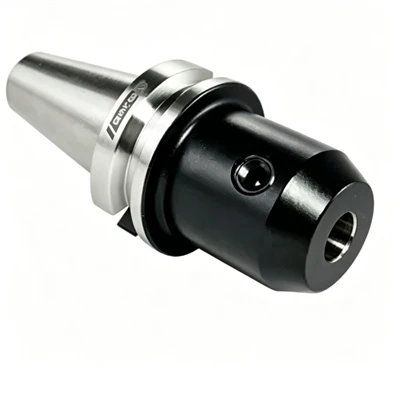
First off, let’s cut through the jargon and make this relatable. If you’ve ever run a CNC mill or lathe, you know that when a tool spins 10,000 RPM (or way higher for high-speed stuff), it’s not just cutting material—it’s generating insane amounts of heat. That heat is the enemy, right? It’s what dulls tools faster, makes your parts warp, and leaves those weird surface marks you have to hand-grind off after the run. The coolant delivery system in a tool holder is basically the pipeline that gets that coolant right where it needs to be—not sloshing around the spindle, but directly at the cutting edge of the tool. No more spraying from a side nozzle that misses the mark 90% of the time.
Wait, let’s get specific about how it works, because there are actually a few different types, and picking the wrong one can cost you big time. Most standard tool holders have coolant ports on the side that pump coolant into the spindle, but internal coolant delivery—this is the big upgrade I sell a lot of—runs the coolant right through the center of the tool holder, through the tool itself, and out tiny holes at the cutting edge. Think of it like a straw for coolant, placing the liquid exactly where friction and heat are happening the most. For shops cutting hardened steel or titanium, this isn’t a “nice-to-have” — it’s required. I had a customer last year who was machining 440C stainless for surgical tools, and before they switched to holders with through-coolant, they were going through 5 end mills per part. After the upgrade? They were getting 20 parts per end mill, and their part quality jumped so much they stopped having to rework. That’s the real stuff, not just textbook talk.
Let’s break down the main types of coolant delivery systems in tool holders, because not all are created equal. First, there’s flood coolant, which is the old-school way—you have a hose or nozzle squirting coolant from the side of the machine, onto the tool and workpiece. It works for basic jobs, but like I said, it’s inefficient. A lot of that coolant just splatters, doesn’t reach the cutting edge, and it can even mess with high-speed operations by creating drag. Then there’s the through-tool coolant system, which splits into two sub-types: high-pressure (HP) and standard (or low-pressure) through-coolant.
High-pressure through-coolant is where it gets exciting, especially for shops doing deep-hole drilling, tapping, or heavy turning. These systems pump coolant at 1,000 PSI or higher, sometimes up to 10,000 PSI for ultra-tough materials. The pressure helps break up chips too—so you don’t get that dreaded chip clog that snaps your tool mid-run. I had a customer in the energy sector machining 8-inch deep holes in Inconel, and they were always dealing with packed chips that made the hole tapered and scraped $2,000 parts. After switching to high-pressure through-coolant holders, their chip evacuation was 100% better, and scrap rates dropped to almost zero. That’s a game-changer for guys running big, bulky parts where downtime costs thousands an hour.
Standard through-coolant is more for general machining—aluminum parts, mild steel, prototyping—where you need better heat control than flood but don’t need that 10k PSI firepower. It runs at 100-300 PSI, which is enough to keep the tool cool and carry chips away without putting extra strain on your spindle or coolant pump. The key here is that these holders have precision-machined internal passages, no gaps or leaks, so every drop gets to the right spot. I tell my customers: if you’re just doing small parts with a Haas or Fadal, standard through-coolant will make a huge difference without breaking the bank.
Now, let’s talk about why so many shops overlook this, and why that’s a mistake. A lot of guys I work with think, “My machine already has a coolant system, so I don’t need to upgrade my holders.” But here’s the thing: the machine’s coolant system is only as good as the holder that delivers it. If your holder has flimsy, poorly placed ports, or internal passages that are rough, coolant will get trapped, flow unevenly, or leak. I’ve seen some cheap tool holders from overseas that have such narrow internal channels, the coolant flow is cut by 70% before it even reaches the tool. That’s like having a fire hose with a kink in it—you’re not getting any water where you need it.
Another big point: this system doesn’t just extend tool life. It improves part surface finish, reduces thermal expansion (so your parts are more accurate), and cuts down on chip recutting. Recutting is when chips that come off the tool get stuck in the cut, and the tool grinds on them, leaving tiny scratches. With a good coolant delivery system, chips get flushed away immediately, so that doesn’t happen. I had a customer making aerospace brackets that required a 32 Ra surface finish—before through-coolant, they were at 40 Ra, and every batch required hand finishing. After switching to my through-coolant holders, they hit 28 Ra right off the machine, and saved 5 hours per part on finishing. That’s profit, plain and simple.
Wait, let’s get into some common myths I hear all the time. Myth #1: “Through-coolant holders are too expensive.” Yeah, they cost more than standard holders, but let’s do the math. If you’re going from 5 end mills per part to 20, that’s 4x less tooling cost. Add in less rework, less downtime, and higher-quality parts, and the payback is usually in 2-3 months. I had a small job shop owner tell me last year he spent $1,200 on 4 through-coolant holders, and saved $8,000 in tooling and rework in the first month. That’s a no-brainer. Myth #2: “I don’t need this for aluminum.” Aluminum can work harden super fast, and the heat from cutting it is real. A lot of guys use flood coolant, but flood coolant can cause built-up edge (BUE) on the tool—where aluminum sticks to the cutting edge, making it dull. Through-coolant flushes that BUE away, so your tools stay sharp longer, and your cuts are smoother. I’ve seen guys run 10x more aluminum parts with through-coolant than without.
Now, what should you look for when you’re shopping for coolant delivery tool holders, especially if you’re working with a supplier like me (wink wink)? First, check the internal passages. They should be smooth, not rough or have sharp corners that cause turbulence. Turbulence makes coolant flow uneven, so you want passages that are machined for laminar flow—consistent, steady flow all the way to the tool. Second, check the seals and connections. For through-coolant holders, you need a reliable seal between the holder and the spindle so coolant doesn’t leak out into your spindle bearings or the machine’s coolant tank. Leaks can cause rust on your spindle, which is a huge repair bill. I only sell holders with double O-ring seals that are pressure-tested up to 1500 PSI, so you never have to worry about that. Third, make sure it’s compatible with your tooling. Some through-coolant holders only work with specific tool types, like solid end mills, so you want something that works with collets, ER collets, hydraulic chucks, whatever you use. I keep a big line of holders that fit all major tooling systems, so my customers don’t have to rework their entire setup.
Also, there are newer advancements in coolant delivery that I’ve been testing lately, like variable flow systems that adjust coolant pressure based on the tool’s RPM. For high-speed machining, you need higher pressure to keep up, but for slower operations like tapping, lower pressure is better so you don’t blow out tap threads. These smart systems are still catching on, but I’ve had a few big aerospace shops test them, and they say it’s cut their cycle times by another 10%. That’s next level stuff.
Wait, let’s address one more thing: maintenance. A lot of guys buy these holders and forget about them, which is a mistake. Coolant has gunk in it—swarf, oil, debris—that can get stuck in the internal passages over time. If you don’t clean the passages, flow will drop, and you’ll lose all the benefits. I tell my customers to clean their through-coolant holders every 3 months, or more often if they’re running heavy swarf jobs. It’s easy—just use a small wire brush or a special solvent to flush out the passages, and make sure the seals are still in good shape. Bad seals are the #1 reason people have issues with through-coolant holders, because they leak, so they stop using them. It’s simple to check: just run a quick pressure test when you do your monthly machine maintenance.
At the end of the day, the coolant delivery system in a tool holder isn’t the flashiest part of your CNC setup, but it’s one of the most impactful. It’s the difference between a part run that goes smooth, stays on budget, and produces high-quality parts, and a run where you’re fighting tool wear, scrap, and downtime all week. As a tool holder supplier, I’ve seen this play out hundreds of times, and I can tell you: investing in the right coolant delivery system isn’t an extra cost—it’s an investment in your business.

If you’re still running on old-school flood coolant, or if you’re dealing with tool wear, part quality issues, or too much downtime, I’d love to chat. I can help you figure out which type of coolant delivery system works for your specific setup, whether you’re a small prototyping shop or a big manufacturing facility. Don’t guess when it comes to something that makes such a big difference. Reach out, and let’s get your runs running smoother, faster, and cheaper.
Milling Tool REFERENCES
- Tooling Solutions. "Internal Coolant Delivery: A Game-Changer for CNC Machining." Modern Machine Shop, vol. 56, no. 8, 2021, pp. 45-52.
- Machining Data Handbook, 5th ed. Society of Manufacturing Engineers, 2019, pp. 112-118.
- ASME B5.50: 2020, "Test Code for Machine Tool Coolant Systems and Related Components." American Society of Mechanical Engineers, 2020.
Shun Wei Precision Technology Co., Ltd.
With abundant experience, we are one of the most reliable tool holder manufacturers and suppliers in China. We warmly welcome you to buy durable tool holder at competitive price from our factory. If you have any enquiry about cooperation, please feel free to email us.
Address: Room901, Building2, Yijing Apartment, Northeast side of the intersection of Central Avenue and East Fifth Road, Tianjin Free Trade Zone (Airport Economic Zone)
E-mail: sale@sw-csd.com
WebSite: https://www.tjswprecisiontool.com/
