If you’ve ever walked into an office at midday and noticed the overhead lights automatically dim, or stepped into a retail store where the lighting brightens right as a cloud passes, chances are you’ve witnessed the quiet collaboration between two key pieces of tech: dimmable LED drivers and daylight sensors. As a supplier of dimmable LED drivers, I talk to customers every week who’re just starting to wrap their heads around how these two components work together, and why pairing them isn’t just a nice-to-have—it’s a cornerstone of energy-efficient commercial and residential lighting. Let’s break this down, from how each part operates on its own, to how they sync up, and the small, smart details that make the system work reliably. Dimmable LED Drivers
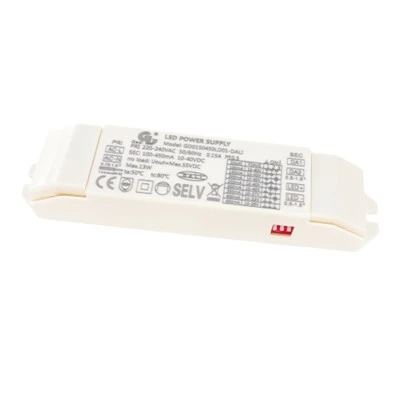
First, let’s set the baseline: what is a dimmable LED driver, exactly? Unlike traditional fluorescent or incandescent ballasts that just supply a fixed amount of power, an LED driver is essentially the “brain” of an LED lighting system. It converts alternating current (AC) from a wall outlet into the low-voltage direct current (DC) that LEDs need, and it adjusts that current to control brightness—dimming, in other words. There are a few common dimming protocols you’ll see in commercial spaces: 0-10V, DALI (Digital Addressable Lighting Interface), and phase-cut (leading or trailing edge). Each driver is built to work with one or more of these, which matters a lot when pairing with a daylight sensor, because the sensor has to send signals the driver can understand.
Daylight sensors, on the other hand, are the “eyes” of the system. They’re not just light meters—they’re calibrated to measure the amount of natural light in a space, not just the raw brightness outside. A sensor installed near a window, for example, will detect how much daylight is hitting the work surface in an office, not the full sun intensity on the sensor itself. The sensor sends a control signal back to the dimmable LED driver, telling it how much to adjust the light output to hit a set, pre-programmed light level. That’s the core of the collaboration: the sensor reads the environment, the driver executes the adjustment.
But let’s get into the step-by-step flow of how this works in a real scenario. Let’s use a small open-plan office as an example, because it’s the most common space where these two are paired. The office’s lighting design specifies a target task illuminance of 500 lux—standard for workspaces, per most energy codes. Here’s what happens from when the office opens at 9 a.m.:
-
At 9 a.m., the sun is low, so only 200 lux of daylight is hitting the desks near the window. The daylight sensor picks up this reading, compares it to the 500 lux target, and sends a signal to the dimmable LED driver. If the system uses a 0-10V dimming setup, the sensor will send a 4V signal (since 0V is off, 10V is 100% brightness, so 4V translates to 40% output, which adds 300 lux from the LEDs to hit the 500 lux target). If it’s a DALI setup, the sensor sends a specific digital command for 40% brightness, which the driver interprets instantly.
-
By 11 a.m., the sun has risen, and the desks near the window are now getting 600 lux of natural light. The sensor detects this, so it adjusts the signal to the driver: now it sends a 0V signal (or a DALI command for 0% brightness) to turn off or dim those specific lights near the window. Meanwhile, the sensor for the back of the office—far from the window, only getting 150 lux of daylight—sends a 3.5V signal, so those LEDs run at 35% brightness to hit the 500 lux target.
-
Midday, a thick cloud rolls in, cutting the window’s daylight to 300 lux. The sensor near the window updates its signal to 2V, telling the driver to run that bank of lights at 20% brightness, adding 200 lux to reach the target. The back of the office, now getting 200 lux, gets a 3V signal for 30% brightness.
-
As the sun sets at 5 p.m., the window’s daylight drops to 50 lux. The sensor sends a 4.5V signal to the window-side lights, and the back-office sensor sends a 4.5V too, so all lights run at 45% brightness to hit that 500 lux target until the office closes, when a master switch turns everything off.
This sounds simple, but the devil is in the details that make the system not just functional, but reliable. One of the biggest mistakes I see new customers make is pairing a generic dimmable LED driver with a cheap daylight sensor that’s not calibrated for the dimming protocol. For example, if you use a phase-cut dimmable LED driver with a 0-10V sensor, the sensor can’t send the right voltage signal, so the driver won’t adjust smoothly—you’ll get flickering lights, or dimming that’s too drastic, or no adjustment at all. That’s why our team spends time with customers during the spec process to match driver dimming type to sensor output, because a mismatch here is the number one cause of “the system broke” calls we get.
Another key point is calibration, and it’s not a one-time set-it-and-forget-it task. Daylight sensors can drift over time—dust on the lens, dirt, even UV exposure can throw their readings off. A sensor that’s not calibrated right might think a space has 100 lux when it’s actually 300, leading to unnecessarily bright, wasteful LED output, or it might dim too much, leaving employees squinting at their screens. That’s why we recommend that paired driver-sensor systems be calibrated during installation, and then checked annually—especially in spaces like retail stores, where dusty display cases can coat sensor lenses quickly, or warehouses, where high humidity can affect components. We also build a small “dead band” into our dimmable LED drivers to avoid constant, tiny adjustments—if the target illuminance only varies by 10 lux, the driver won’t dim or brighten the lights, preventing the harsh flicker that comes with rapid, constant signal changes.
Energy savings are, of course, the biggest driver for pairing these two components, and the numbers back it up. The U.S. Department of Energy has data showing that daylight harvesting systems (that’s the official term for this combination of dimmable drivers and daylight sensors) can cut commercial lighting energy use by 25-40%—that’s thousands of dollars a year in utility costs for a mid-sized office, or even more for a big-box retail space. For residential applications, like a sunlit living room or a home office, the savings are smaller per space, but over a year, they add up too—especially if you use ENERGY STAR-certified dimmable LED drivers paired with sensors that are rated for low-power operation.
Wait, but what about spaces that don’t have windows, or have inconsistent daylight? A lot of customers ask us that. Daylight sensors can be paired with occupancy sensors too, so in a windowless conference room, the system only turns on lights when someone is present, and adjusts brightness based on the artificial light in the room. That said, the core collaboration between dimmable LED driver and daylight sensor still applies—regardless of the light source, the sensor is measuring the total illuminance, and the driver adjusts to hit the target. Some newer sensors even can connect to building automation systems, so they can pull in weather data (like a forecast for a cloudy day) to pre-adjust the driver levels before the light changes—this is called predictive daylight harvesting, and it’s becoming more common in large commercial buildings.
I should also clear up a common misconception: this isn’t the same as the manual dimmer switches you might use for residential accent lighting. Manual dimmers let you set a fixed brightness, but daylight harvesting systems are dynamic—they adjust in real time, responding to changing natural light. For example, if you’re setting a manual dimmer to 50%, that’s a static setting; a daylight-driver-sensor system will keep adjusting that level throughout the day to maintain your target. That’s the difference between convenience and smart energy management.
Now, let’s talk about the practical side for installers. When putting this together, there are a few best practices we share with our clients. First, don’t mount daylight sensors in direct sunlight (except for outdoor applications, of course)—mount them on a north-facing wall (in the Northern Hemisphere) so they’re not in direct sun all day, which would skew their readings. For window-side sensors, mount them 1-2 feet below the window sill, so they’re measuring the light hitting the work surface, not the direct sun on the sensor itself. Second, make sure the dimmable LED driver is rated for the total wattage of the lights it’s controlling—if you have 10 LED bulbs that draw 10W each, you need a driver that’s rated for at least 100W, not a lower one, because dimming doesn’t reduce the total power draw in a way that lets you underrate the driver. Third, test the system right after installation: have someone stand near the window with a light meter, check that the sensor’s reading matches, then cover the sensor with a dark cloth to simulate less daylight, and confirm the driver dims the lights as expected. We include a step-by-step installation guide with every dimmable LED driver we ship, specifically for pairing with common daylight sensors, to make this process as smooth as possible.
Another thing we see a lot: older commercial buildings that are retrofitting from fluorescent lighting to LED, and want to keep their existing daylight sensors. The good news is that most legacy daylight sensors can work with modern dimmable LED drivers, as long as you match the dimming protocol. For example, many older sensors are 0-10V, so a 0-10V dimmable LED driver will work with it—you don’t have to replace the entire lighting control system, just the driver and LED fixtures. That’s a big win for retrofits, because it cuts down on cost and installation time. If you’re in that position, just make sure you confirm the sensor’s output voltage with your driver supplier—we can help cross-reference most common sensor models with our drivers.
Let’s address a common concern: reliability. Will this system work when the power goes out? Well, daylight sensors only work when there’s power, obviously, but most dimmable LED drivers for daylight harvesting are designed to have a “fail-safe” mode—if the sensor stops sending a signal (for example, if the wiring is cut), the driver will default to full brightness, instead of turning off unexpectedly. That’s a critical safety feature, especially in spaces like hallways or emergency exits, where you don’t want the lights to go out during a sensor malfunction. We build fail-safe mode into all our dimmable LED drivers for daylight harvesting applications, because we’ve had customers learn the hard way what happens when that feature is missing.
So, to wrap this up, the relationship between dimmable LED drivers and daylight sensors is a masterclass in interconnected lighting tech: the sensor acts as the eyes, measuring the environment and translating light levels into control signals, the dimmable LED driver acts as the brain, interpreting those signals and adjusting power to the LEDs to hit a consistent, pre-set illuminance level. It’s not just about dimming—it’s about smart, responsive lighting that saves energy, improves occupant comfort, and is flexible enough to work in everything from small home offices to large retail chains.

If you’re looking to upgrade your lighting system with dimmable LED drivers paired with daylight sensors, or have questions about matching the right components for your space, our team is here to help with tailored guidance and reliable, certified products. Don’t hesitate to reach out to discuss your specific needs and get a quote for bulk or custom configurations.
Constant Voltage LED Drivers References
- U.S. Department of Energy. (2022). Daylight Harvesting for Commercial Buildings. Energy Efficiency and Renewable Energy Office.
- National Electrical Manufacturers Association (NEMA). (2021). Standards for Dimmable LED Drivers and Lighting Control Systems.
- International Energy Agency (IEA). (2023). The Role of Smart Lighting in Global Energy Efficiency.
- Illuminating Engineering Society (IES). (2020). Lighting Handbook: Application and Design, 10th Edition.
- Lighting Controls Association. (2022). Best Practices for Integrating Daylight Sensors and Dimmable LED Drivers.
Foshan Gedi Electrnoic Co., Ltd.
As one of the most professional dimmable LED drivers manufacturers in China, we’re featured by quality products and good price. Please rest assured to buy advanced dimmable LED drivers for sale here from our factory. If you have any enquiry about cooperation, please feel free to email us.
Address: 4th Floor, Building 8, South District, Huayi Decoration City, No.10, Laixiang Road, Shiwan Sub-district, Chancheng District, Foshan City, Guangdong Province, China.
E-mail: market@gedi-lighting.com
WebSite: https://www.gedi-lighting.com/
